
Martin Guerre; eight years of fraud


This story certainly is one of the most amazing and mind-blowing—one of my favorites historical facts for sure! Indeed, it might be one of the most spectacular identity theft ever (of the 16th century, at least, but still!). Many books and articles have talked about the story, and a movie (as you can see in the image above) has been made. Despite its popularity in french culture, i still found it to be an underrated story, as not many people have talked about it in english..
The facts
Martin Guerre, from his real name Aguerre, was no more than a simple man, living in the pyrenean village that is Artigat. Born in a modest and somewhat normal family, consisting of him and four sisters. His father ran a tile factory, a job that he already was practicing in Hendaye, their town of origin. Said factory would later be passed down to Martin.
In 1538-1539, Martin was wed to Bertrande, they were aged of ten to fourteen years old—which was considered young, even for this time period. What followed was a marriage so loveless that the young couple stayed childless for at least eight years. That is, untill, Bertrande gets unexpectedly pregnant.
in 1548, Martin was accused of stealing his father's harvests (a very serious crime at the time.) To escape his own incoming misery and the life which he apparently loathed, Martin decides to flee. He ran away from his problems (literally), and came back eight years later.
A changed man
In the summer of 1556, a man is seen walking around the village of Artigat. Suddenly, a few villagers run towards him; it’s Martin Guerre! Indeed, the man looks exactly like him..eyes, voice and personality alike (or so, almost), every single of the disappeared man’s neighbors agree; it’s him. In fact, it was nearly impossible to ever doubt him—whenever someone asked him, or talked to him about shared memories, he seemed to remember, details and all—he knew everything, what's there to doubt?
And so he successfully convinced the whole village that he was Martin Guerre, including his wife—who was absolutely rejoiced to finally see him again, forgetting all of their past arguments and whatnot. And three years later, Bertrande gave life to a second child. He also did the same with his four sisters, who, also, testified that the man was infact their lost brother.
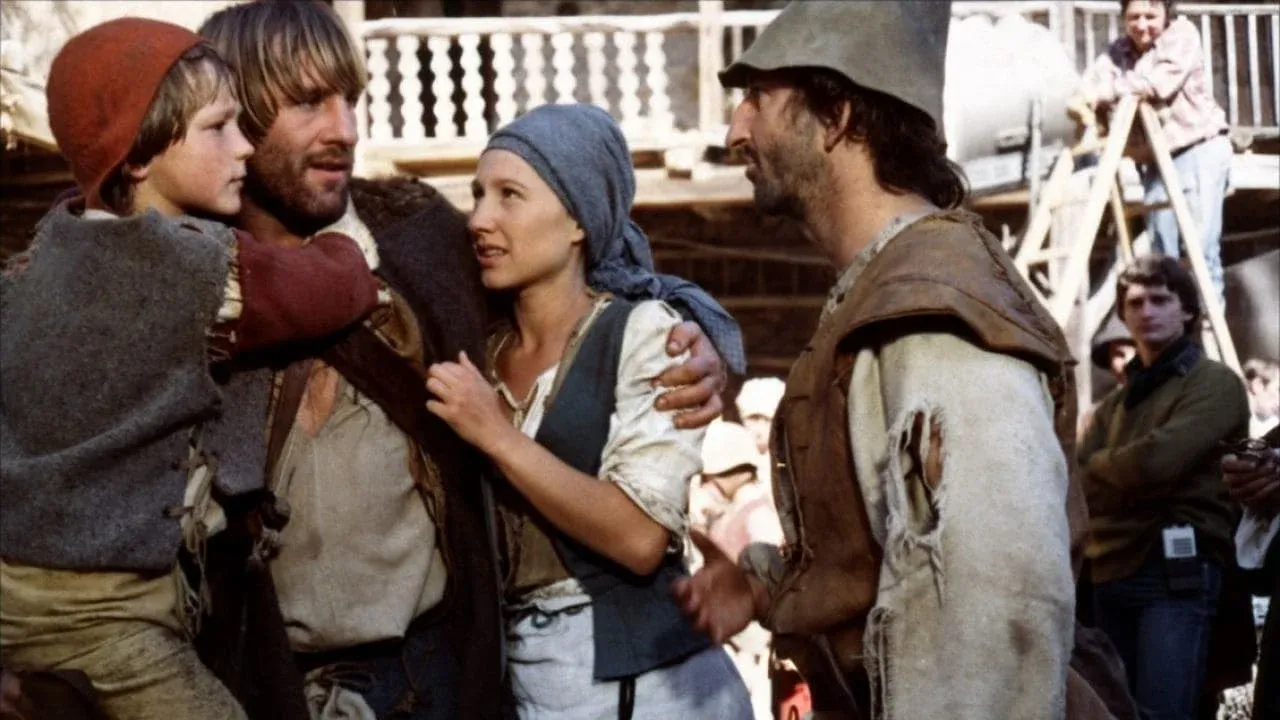
However, only one person isn't so happy. His uncle, Pierre Guerre, is starting to have doubts on the man’s true identity; for some reason, that just could not be him. In one conversation where Martin demanded to have his father's heritage, who died during his absence and rightfully reclaimed his goods, which his uncle administered during said absence, his uncle refused to do so (as he was known for being quite greedy). In response, Martin sued him, and won. Pierre Guerre, who never knew his nephew to be this brave, started having doubts, and so begun an investigation against the man who claimed to be his nephew.
The longest hunt
Thus started an incredibly long battle against Martin Guerre, or so, the man who claims to be him. His uncle wasn't the only skeptical person, by far. In the village, opinions are starting to differ; the joy and amazement now replaced by doubts and questions. It was told that in 1559, a soldier who was passing by the village, declared that “the real Martin lost a leg in the war, during the siege of Saint Quentin”.
In the same year, Martin was accused of arson by Jean d'Escornebeuf, lord of Lanoux, who had him imprisoned in this town on the orders of the seneschal of Toulouse. Escornebeuf, who was the first nobleman to have purchased a land in Artigat, added in his complaint, at the suggestion of Pierre Guerre, that the prisoner "had usurped the marital bed of another man". Bertrande remained on her husband’s side, who eventually was acquitted.
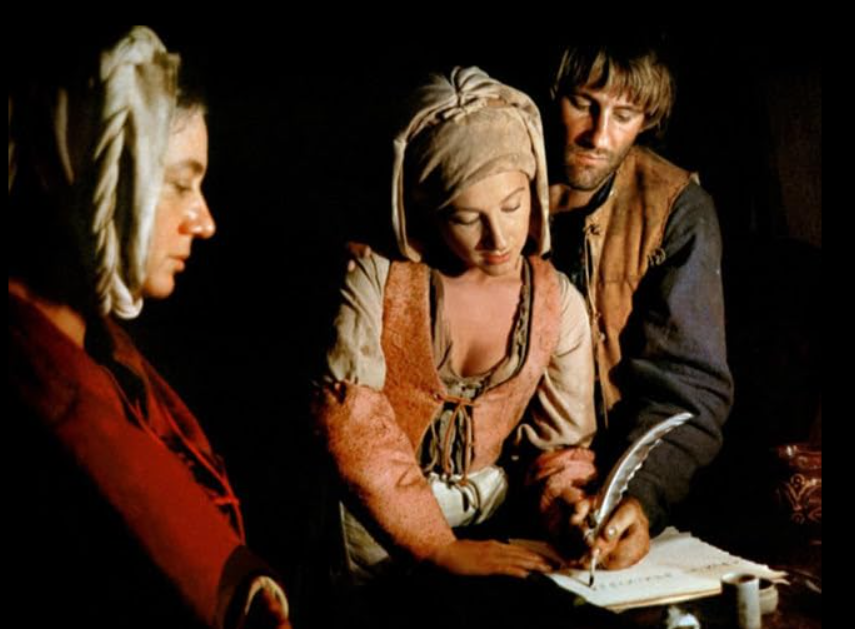
Frustrated by his unsuccessful attempt at getting the man jailed, Pierre Guerre continued his investigation, finally, after a few meetings, he thought as if he found the true identity of the man pretending to be his nephew; Arnaud du Thil, whose reputation is far from proper at the village he resided, the little town of Sajas. Known for multiple frauds; nicknamed "Pansette"("greedy") in his home village. Rumors says that, after befriending the real Martin Guerre, he supposedly learned all the details of the latter's life and decided to impersonate him in order to appropriate the family inheritance.
Pierre thus launches a new lawsuit, claiming to do so on Bertrande's behalf. He and Bertrande's mother pressure her to testify against Martin and even forced her to do so, that is, according to Betrande.
The trial started in 1560, at Rieux. There, Betrande, despite her testimony, tries to defend the man she lived a total of eight years with, saying that she truly believed the man accused of identity theft to truly be her husband. Both of them then gave separate, identical accounts of their private lives before 1548. The man claiming to be Martin challenged her: if she was willing to swear he was not her husband, he agreed to be executed—as she was fervently religious, Betrande remained silent out of fear. After hearing more than 150 witnesses, some recognizing Martin (including his four sisters), others recognizing Arnaud du Tilh, and still others refusing to give an opinion, the Court found the defendant guilty of impersonating Martin Guerre and of breach of trust against Bertrande de Rols.
However, Guerre was obviously not going to let the court ruin his new life. This is why he immediately appealed to the Parliament of Toulouse. Officials arrested Bertrande and Pierre on charges of false accusation, and in the case of Pierre, soliciting perjury. The man eloquently argued his case, and the judges in Toulouse tended to believe his version of the story: that Bertrande was pressured to perjury by the greedy Pierre Guerre. The accused underwent detailed questioning about his past; his statements were double-checked, and no contradictions were found.
Then, dramatically, a man appeared in Toulouse during the trial; the true Martin Guerre arrived, his wooden leg, already testifying the truth. Although, when asked about the married couple's past, he wasn't able to answer the questions as well as the alleged impostor, as, naturally, he had forgotten a few details; however, when the two men were both presented to the Guerre family, the case was closed: Pierre, Bertrande, and Martin's four sisters all agreed that the newly arrived man was the true Martin Guerre.
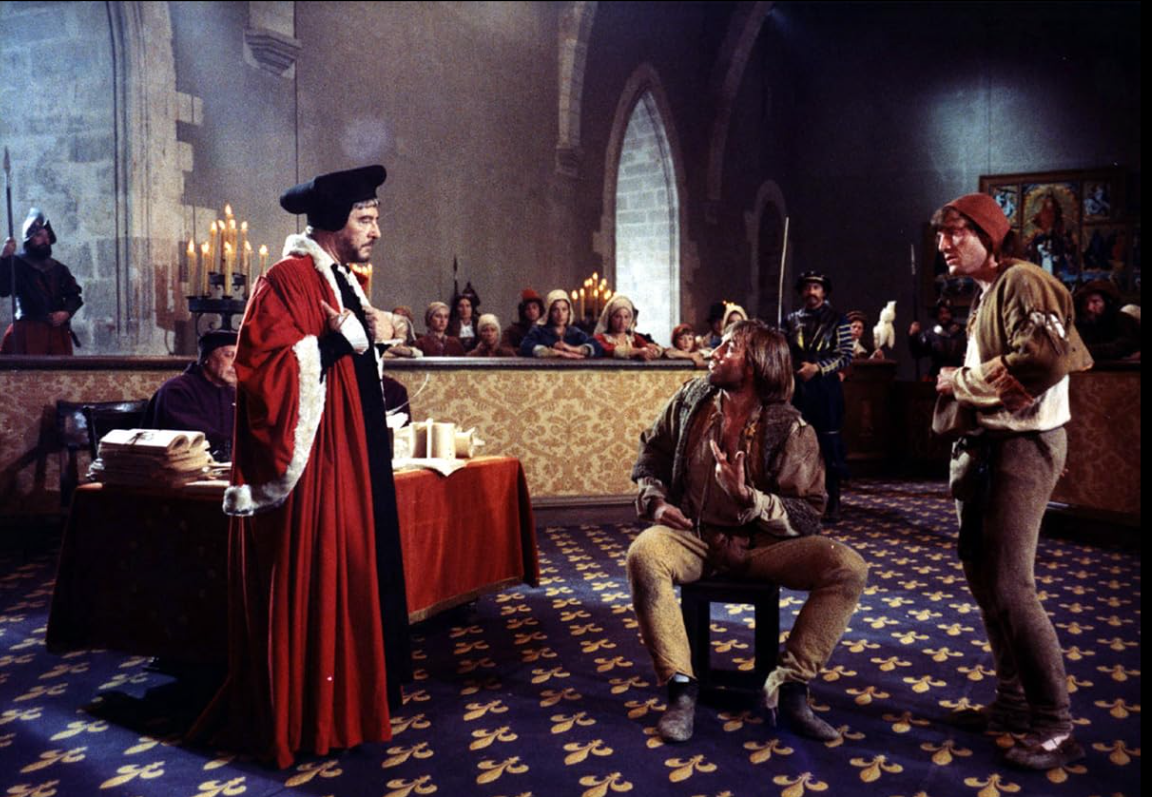
The impostor, who maintained his innocence, was convicted and sentenced to death for adultery and fraud; the public sentencing on 12 September 1560 was attended by Michel de Montaigne, who later talked about the case in the Book III of the Essays, in the chapter "Des Boiteux"("Of the Lame");
In my childhood, I witnessed a trial, published by Corras, a councilor from Toulouse, concerning a strange accident involving two men who presented themselves as each other. I recall (and remember nothing else) that he seemed to me to have rendered the imposture of the man he judged guilty so marvelous and so far exceeding our understanding, and his own, as a judge, that I found the verdict condemning him to hang quite audacious. Let us consider some form of decree that says: "The Court understands nothing about it." More freely and ingenuously than the Areopagites did, who, finding themselves pressed with a case they could not develop, ordered that the parties should come to a hundred years' worth.
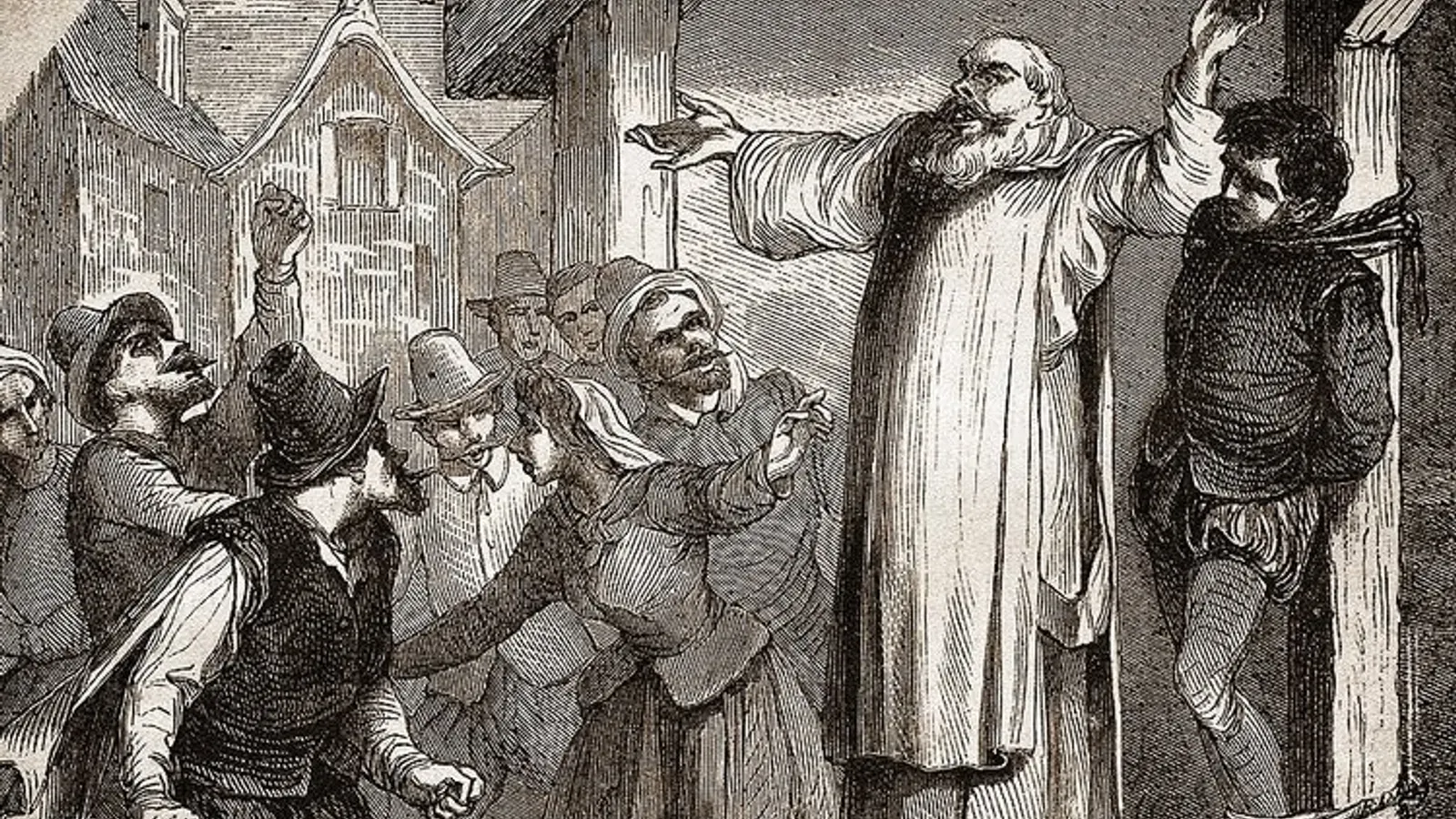
Then, Arnaud du Tihl revealed that he had learned about Guerre's life after two men had confused him with Guerre, and then decided to take Guerre's place, with two unknown conspirators helping him with details. He apologized to all involved, including Bertrande, for having deceived them. He was hanged in front of Martin Guerre's house in Artigat four days later.
Conclusion
Finally, it is said that During his absence, the real Martin Guerre had probably gone to Spain where he served as a footman for a cardinal, Francisco de Mendoza, in Burgos. Belonging to the Spanish army, he may have been sent to Flanders and participated in the Battle of Saint-Quentin on August 10, 1557, where he was wounded and subsequently had a leg amputated. The reason for his return, at the very moment of his trial, is unknown. He also rejected his wife's apologies, saying that she should have known better than to take another man.
I think this story is particularly fascinating not only because of the huge fraud,i mean—eight years of pretending to be someone else, and doing it so well, is mindblowing—but also because it sort of gives us a little reminder; appreciate what you have or someone else will appreciate it for you. The real Martin Guerre..was not satisfied with his life, it seems, and truly, i don't even know why he came back. I first had the slightly naive thought that he might've remembered the loved he had for his family after realizing that someone else took his place. But i think that in the end, he only came because people were searching for him.
And you? What do you think of this story?
Sources
2.Historia
6.Youtube