
Forgotten: The Chevalier de Saint-Georges

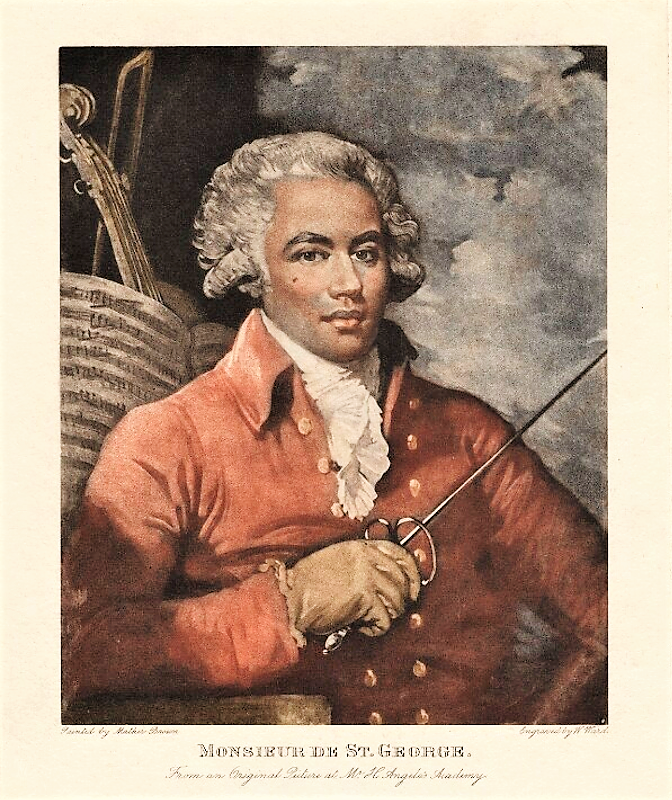
Inspired by this article, "Forgotten" is a series of articles that brings historical heroes—who have nonetheless been forgotten—back into the spotlight (published bi-weekly).
As one of the finest swordsmen of his time and a virtuoso violinist, the life story of the Chevalier de Saint-Georges is worthy of a great novel. Despite the prejudice regarding his skin color and origins, he earned the admiration of his contemporaries, who heaped praise upon him. Sadly, history forgot him for nearly two centuries!
His origins
Joseph Bologne was his real name. He was born in 1745 in Guadeloupe to a slave-owning father, Georges Bologne, and an African slave named Nanon. When his father faced the threat of imprisonment following a duel that went wrong, he took his son with him to Paris, where young Joseph received an aristocratic education.
In 1749, he began his schooling in the household of Nicolas Texier de La Boëssière — a man of letters and politician. There, he learned not only various sports, such as fencing, but also the violin. Both of these pursuits — art and sports — would become an integral part of his life.
An exceptional fencer...
At just sixteen years old, he defeated Alexandre Picard — a fencing master from Rouen and a musketeer to the King — who had called the young man an "upstart mulatto from La Boëssière." Possessing an exceptional talent for fencing, his peers often described him as the best swordsman in history.
He was then quickly appointed to the King's Guard and knighted at the age of nineteen. However, when the French Revolution broke out in 1789, he joined the side of the revolutionaries within the National Guard in Lille, where he was living at the time. As the colonel of a 1,OOO-man unit, he fought against slavery in the French colonies. Furthermore, this distinction made him the first Black colonel in the French army. In this unit was found to be Thomas-Alexandre Dumas, the father of french author Alexandre Dumas.
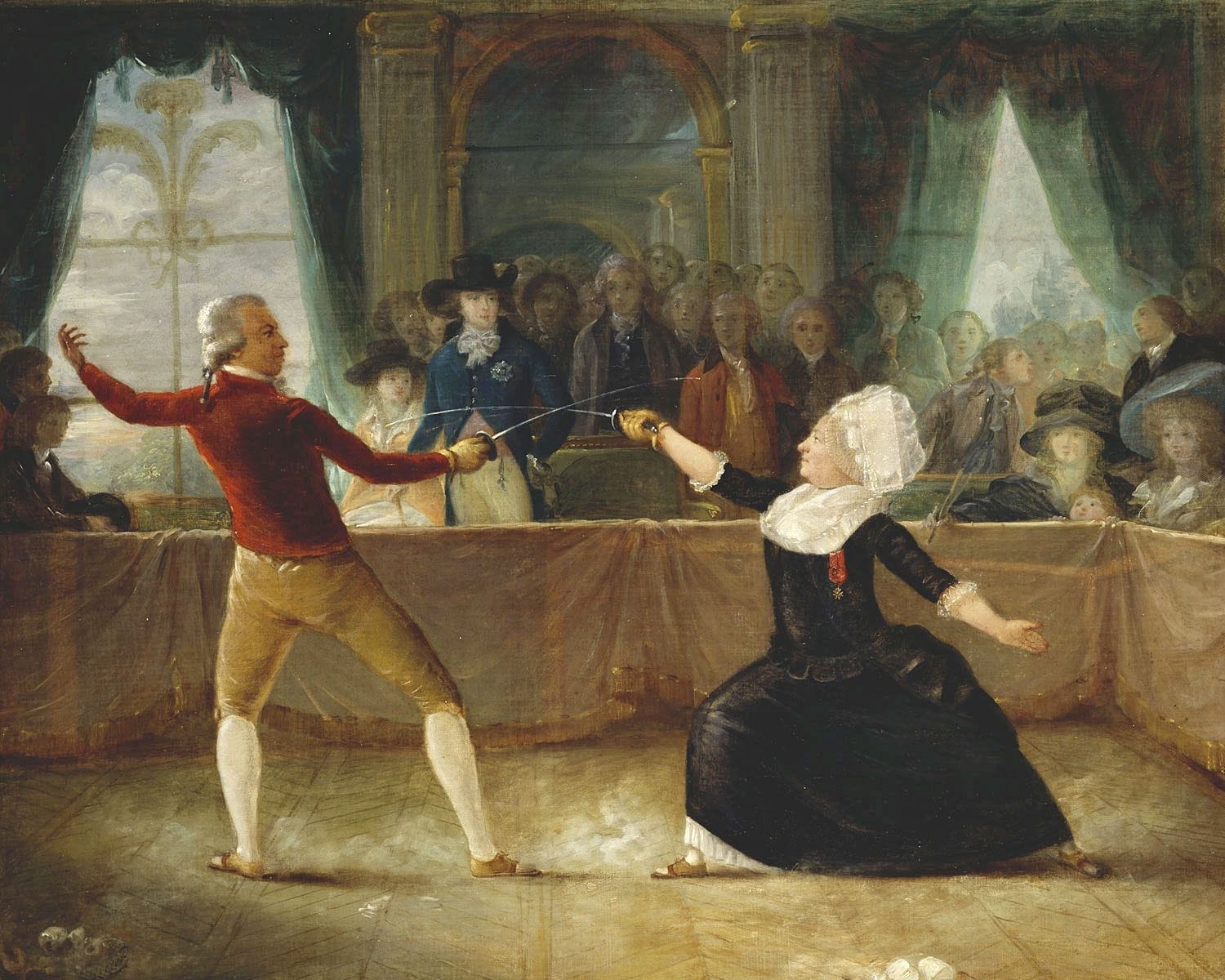
Having already achieved a certain level of popularity when he was younger, his fame grew all the more when in 1787, he took part in a duel against the Chevalier d'Eon — a figure who could arguably be called a star of that era.
And an exceptional musician!
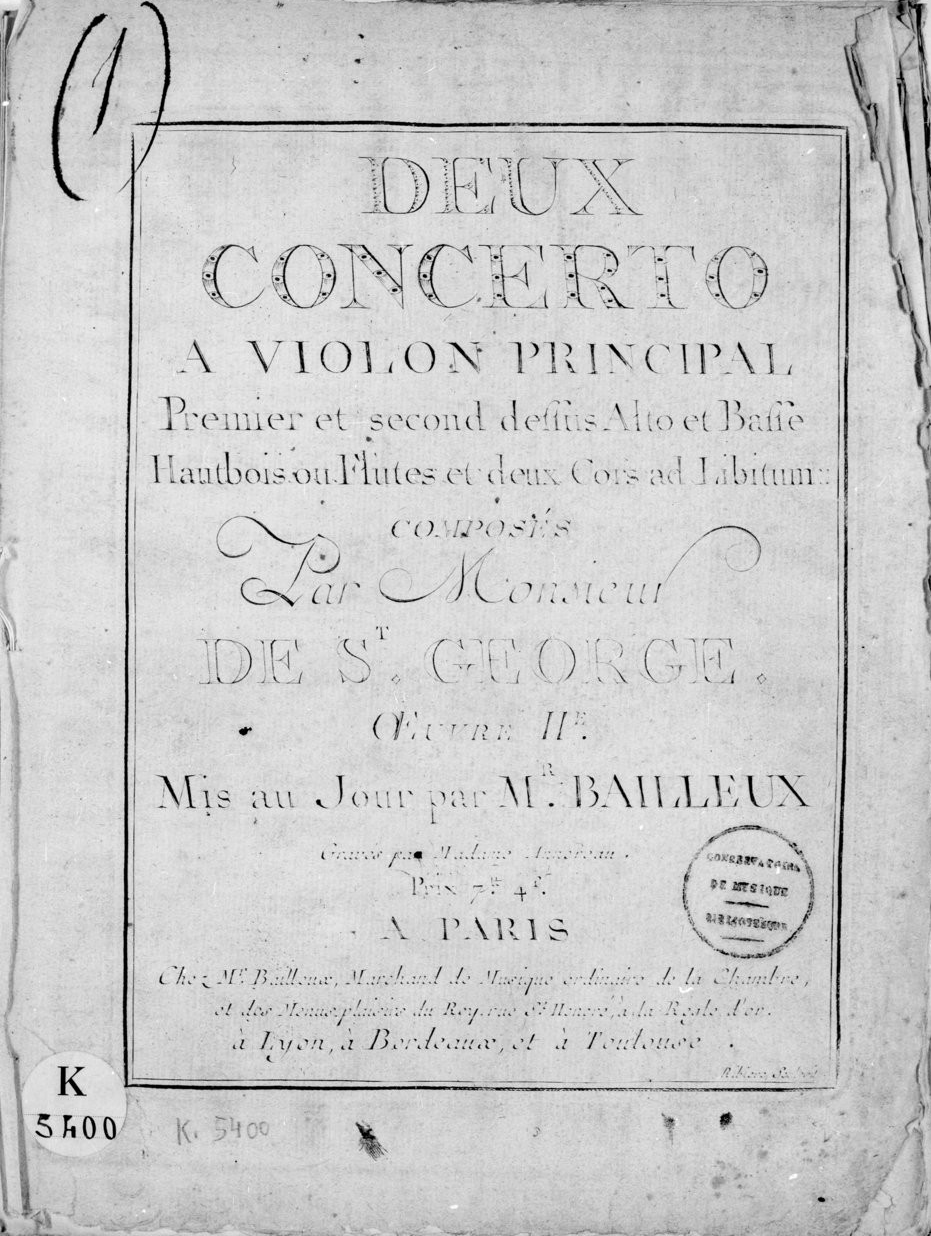
As for his musical background, historians know little about his formal training; some say he was taught by François-Joseph Gossec (1734-1829), Antonio Lolli (1725-1812) or Pierre Gaviniès (1728-1800). However, it is well established that he was a prodigy, whoever his mentor might've been. The majority of his compositions were created when he was young, published between 1771 and 1789.
He had the opportunity to conduct several orchestras, including the Concert des Amateurs, which he joined in 1769 and later went on to lead. Under his direction, this ensemble was described by the Almanch Musical in 1785 as "the best symphonic orchestra in Paris, and perhaps in all of Europe.". He also conuducted the orchestra of Madame de Montesson, the Concert de la Loge Olympique, and the Cercle d'Harmonie.
His musical talent earned him the admiration of Marie Antoinette herself, who chose him as her music teacher! The King louis XVI himself named him director of the Royal Opera — although this decision was subsequently revoked due to the ensuing scandal: Artists submitted a petition to the Queen, stating that "their honor and the delicacy of their conscience would never permit them to be subject to the orders of a mulatto."
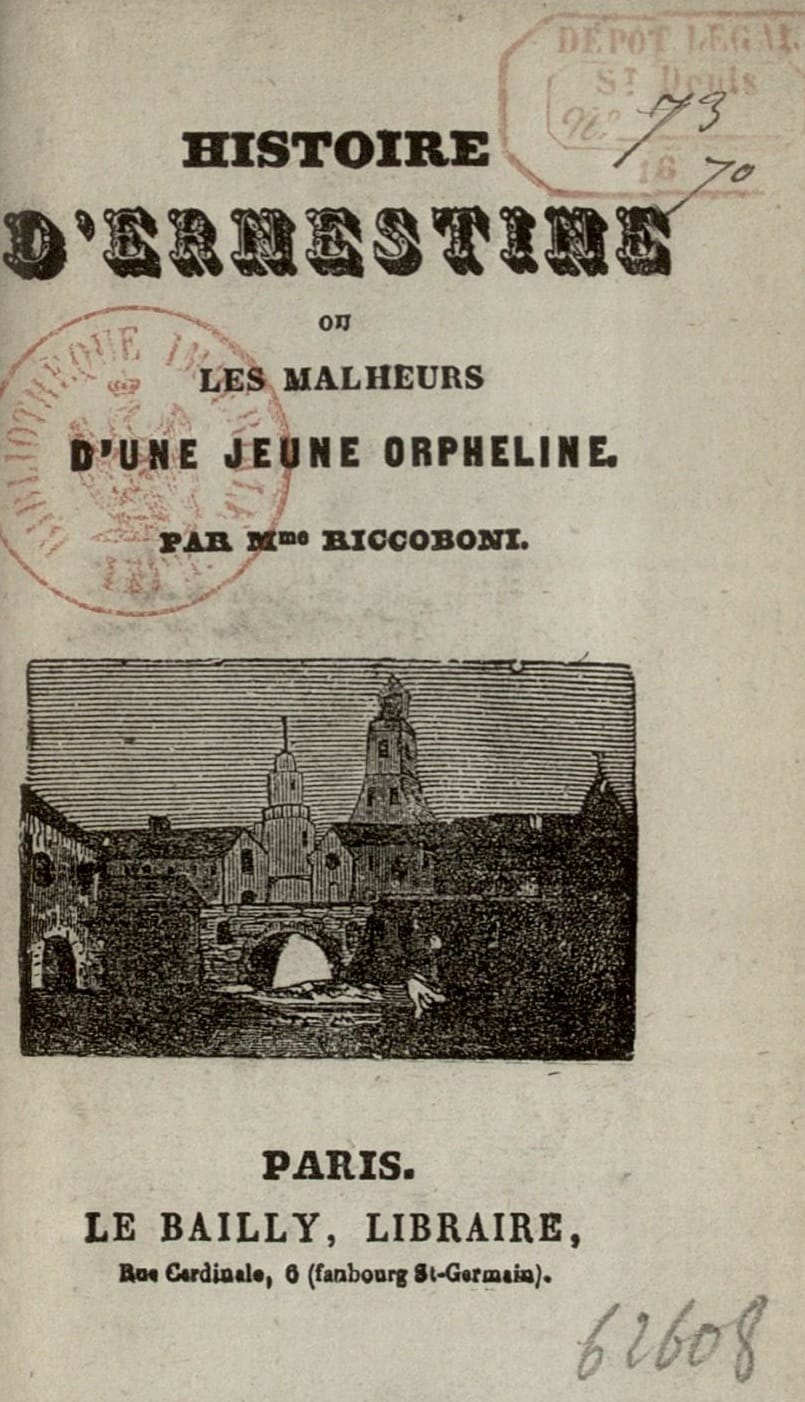
After this, he turned to theater and composed a total of six operas, one of which, called Ernestine, was written by Choderlos de Laclos, unknown at the time. All of his operas are partially conserved except for l'Amant anonyme which the complete version can be found in the National library of France.
On July 10, 1799, one of the greatest swordsmen and composers of the 18th century passed away. Although history attempted to erase him — most notably in 1802 when slavery was reinstated under the reign of Napoleon Bonaparte and his music was subsequently banned — his story, his influence and his art posessed such enduring power that, in the 20th and 21th centuries, individuals such as Alain Guédé (author of his biography), dedicated themselves to bringing him back into the light and according him the tribute he deserved.
In feats of arms, his equal was never seen; A charming musician, a skillful composer, At swimming, skating, hunting, or riding— Every pursuit, it seems, comes easily to him, And in each, he finds an original approach. If combining such talents with such modesty Marks the pinnacle of this "French Hercules," It is because his noble spirit, free from all jealousy, Found happiness in this all-too-short life Only in the true friends his heart had made.
-Conventry Street, publication issued in April 1788, no. 4.